Product Description
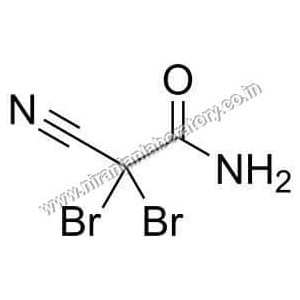
2,2-Dibromo-3 nitrilopropionamide is a white to yellow powder with mild medicinal antiseptic odor. It is used in paper and pulp industry. It is free from impurities and therefore used in many consumer products like inks, waxes, polishes, detergents etc. Being broad spectrum biocide, 2,2-Dibromo-3 nitrilopropionamide is also used in industry to control fungi etc. This should be stored in original container with the lid tightly closed. For this purpose, we check all containers properly before we supply them to our customers at reasonable price.
Versatile Applications Across Industries2,2-Dibromo-3-Nitrilopropionamide serves as a powerful biocide, primarily utilized in water treatment plants, the paper manufacturing process, oil field operations, and as a preservative for paints and cooling water systems. Its broad-spectrum efficacy makes it an indispensable agent ensuring process safety and material longevity.
Physical and Chemical PropertiesSupplied as powder or granules, DBNPA boasts a high purity greater than 99%. It has a molecular formula of C3H2Br2N2O, density of 2.36 g/cm, and displays mild and characteristic odor. The substance is highly soluble in water, allowing for seamless integration into aqueous processes.
FAQs of 2 2-Dibromo-3 Nitrilopropionamide:
Q: How is 2,2-Dibromo-3-Nitrilopropionamide typically used in industrial applications?
A: This compound functions mainly as a rapid-acting biocide. It is commonly added to water treatment systems, paper production lines, oil field water circuits, and paint formulations to control microbial contamination and preserve product quality.
Q: What is the recommended process for handling and storing DBNPA?
A: Handling should be done with appropriate safety measures, such as gloves and protective clothing, as the substance is poisonous. Store in a cool, dry, well-ventilated area, away from incompatible materials, and in tightly sealed containers to maintain shelf life and prevent moisture ingress.
Q: When should DBNPA be added during the processing of water or paint systems?
A: It is best introduced at stages where microbial contamination risk is highest. For water treatment, dosing typically occurs during recirculation or before key purification steps. In paints, it is incorporated during mixing to ensure uniform distribution and long-term preservation.
Q: Where is DBNPA commonly sourced and who supplies it?
A: DBNPA is widely produced and exported by Indian manufacturers and suppliers. It is available from specialized chemical exporters who ensure compliance with international quality standards and supply industrial-grade material globally.
Q: What are the key benefits of using 2,2-Dibromo-3-Nitrilopropionamide in water and industrial systems?
A: The main advantages include its fast antimicrobial action, broad compatibility with various process systems, high purity, and effectiveness even at low concentrations. These qualities help in extending operational life and reducing downtime due to biofouling or contamination.
Q: Is this product suitable for all cooling water systems?
A: DBNPA is suitable for most cooling water systems due to its high solubility in water and strong biocidal properties. However, compatibility with system materials and regulatory acceptance should be verified prior to application.















 Send Inquiry

